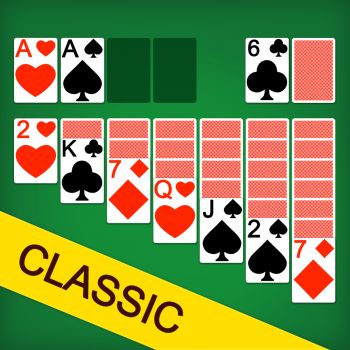
Solitaire Overview
What draws players to this timeless card puzzle
Solitaire offers a quiet yet challenging experience that has appealed to generations of gamers. The game presents a shuffled deck of cards that must be arranged in descending order while alternating colors, creating a satisfying pattern of logic and chance. Each session begins with a familiar tableau of seven columns, and the goal is to move every card to four foundation piles, one for each suit. The simple premise hides deep strategic layers, making each hand feel fresh and rewarding.
Who finds enjoyment in a solitary match
The audience for Solitaire includes casual players looking for a short distraction, as well as dedicated enthusiasts who track win rates and strive for perfect clears. Because the game can be played with a mouse or touch input, it fits comfortably on desktop computers, laptops, and tablets. It is especially popular among people who enjoy a quiet mental workout without the pressure of competing against others.
Key Elements of the Game
Core mechanics that define the experience
- Cards are dealt into a tableau of seven piles, with only the top card of each pile visible.
- Players may move a single card or a stacked sequence of cards that follow descending order and alternating colors.
- When an empty tableau space appears, any king or a sequence beginning with a king may be placed there.
- Foundations build upward from ace to king, each foundation dedicated to a single suit.
- Clicking a card automatically moves it to a suitable foundation if the move follows the rules.
Strategic considerations that separate novices from experts
- Prioritize uncovering hidden cards early, as each revealed card expands possible moves.
- Reserve empty tableau spots for high‑value cards, especially kings, to create new pathways.
- Balance the use of the draw pile; drawing too many cards at once can limit future options.
- Plan moves ahead by visualizing how a sequence will free up lower cards.
- When possible, move cards to the foundations in a way that does not block critical tableau cards.
Reasons to Choose Solitaire for Your Next Session
Benefits that go beyond simple entertainment
Playing Solitaire sharpens logical thinking and improves pattern recognition. The game requires players to evaluate multiple possibilities before committing to a move, which can enhance decision‑making skills in other areas of life. In addition, the solitary nature of the game provides a calming environment that can reduce stress after a busy day.
How the game fits into a busy lifestyle
The rules are easy to learn, and a single round can be completed in a few minutes or extended over a longer period, depending on personal preference. Because the game runs directly in a web browser, there is no need to install additional software. Players can pause at any time, return later, and continue from the same layout, making it an ideal choice for short breaks or longer leisure periods.
How to play
Step by step guide for new players
- Open the game interface; the tableau of seven columns will be displayed with the top cards visible.
- Click on a card that can be moved to another column, a foundation, or an empty space according to the rules.
- If a move creates an empty column, place a king or a sequence beginning with a king into that space.
- Use the draw pile to reveal additional cards when no moves are available on the tableau.
- Continue moving cards to the foundations in ascending order, from ace to king, until all cards are placed.
Control summary for quick reference
- Left‑click selects a card or a valid sequence of cards.
- Drag the selected cards to the desired destination.
- Double‑click automatically moves a card to a foundation if the move is legal.
- Press the draw button to reveal the next card from the stock pile.
- Use the undo button to revert the most recent move if a mistake is made.
Frequently Asked Questions
Can I play Solitaire on a mobile device
Yes the game is designed to work with touch input, allowing players to tap and drag cards on smartphones and tablets. The interface automatically adjusts to different screen sizes for a comfortable experience.
What is the objective of a standard Klondike layout
The objective is to move all 52 cards to the four foundation piles, building each pile from ace to king in the same suit. When every card is successfully placed on the foundations, the game is considered won.
Is there a time limit or scoring system
Traditional Solitaire does not impose a time limit, but many versions track the number of moves and the time taken to complete a game. Players can use these metrics to compare their performance with previous attempts or with other players.
How many times can I undo a move
The game typically allows unlimited undos, giving players the freedom to experiment with different strategies without penalty.
Do I need an internet connection to play
Once the game has loaded in the browser, it can be played offline. An internet connection is only required for the initial loading of the page.